
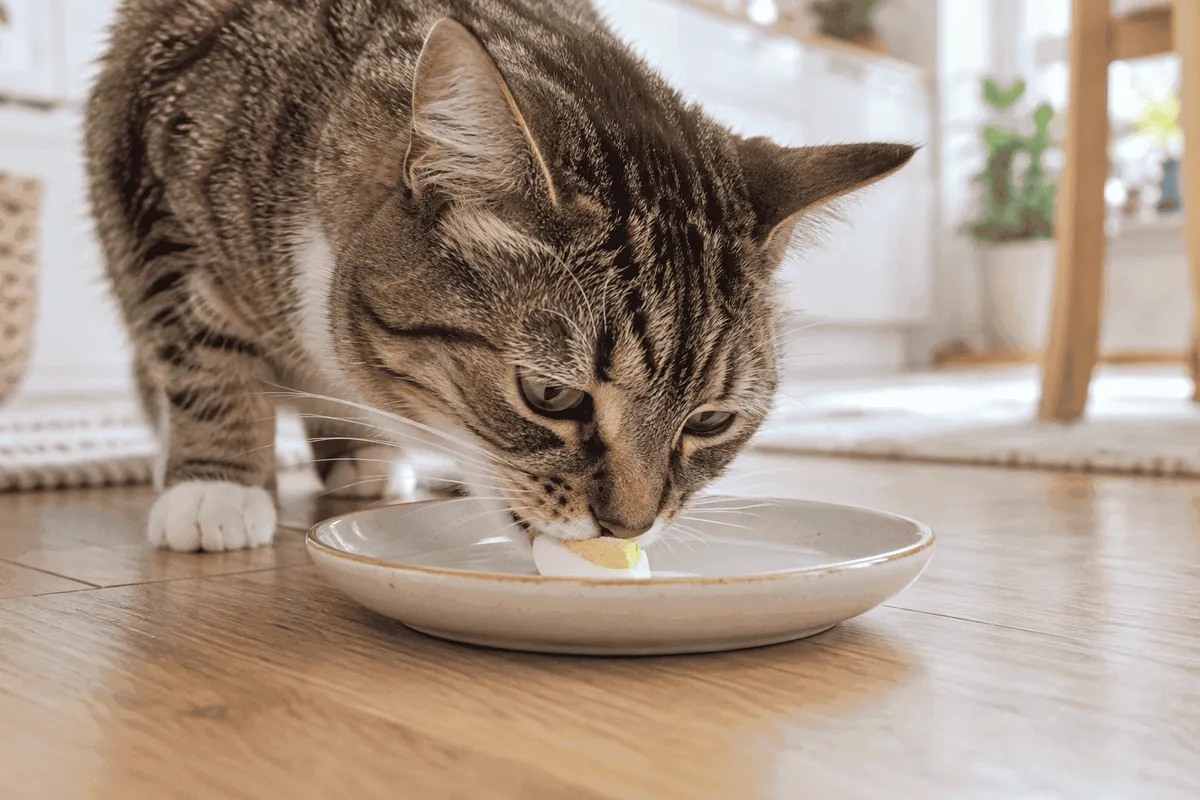
Key Takeaway Yes, cats can eat eggs — but only when the egg is fully cooked and plain. Raw eggs can carry Salmonella, and their avidin binds biotin. Cooked egg served plain, 1–2 teaspoons once or twice a week and always under 10% of your cat's daily calories, is a safe treat.
Quick Verdict
Yes, cats can eat eggs — but only when the egg is fully cooked and plain.
Raw eggs are not safe. They can carry bacteria and cause vitamin problems over time. Cooked eggs, served with no salt, butter, oil, or seasoning, make a healthy treat in small amounts.
| Metric | Verdict |
|---|---|
| Safety Status | Safe (cooked and plain only) |
| Toxicity Risk | None when cooked. Raw eggs carry Salmonella and avidin. |
| Safe Portion | 1-2 teaspoons, or about 1/4 of a large egg |
| Feeding Frequency | Once or twice a week at most |
| Nutritional Value | Complete protein, vitamin B12, riboflavin, selenium |
Why Cooked Eggs Are Good for Cats
Cats are obligate carnivores. Their bodies are built to run on animal protein, and eggs are exactly that.
One large egg gives your cat:
- Complete protein with every amino acid a cat cannot make on its own
- Vitamin B12 and riboflavin for energy and a healthy nervous system
- Selenium and iron in a form cats absorb easily
- Vitamin D for strong bones
Cooked eggs are also soft and easy to digest. That makes them a good choice for older cats or cats with sensitive teeth.
But eggs are a treat, not a meal. Treats should never make up more than 10% of your cat’s daily calories. The rest must come from a complete cat food.
Why Raw Eggs Are Risky
Vets do not recommend raw eggs for cats. There are two main reasons.
1. Bacteria. Raw eggs can carry Salmonella and E. coli. Cats can get food poisoning just like people. Kittens, senior cats, and cats with weak immune systems face the highest risk.
2. Avidin and biotin. Raw egg whites contain a protein called avidin. Avidin binds biotin, a B vitamin. One small bite is unlikely to cause harm, but a habit of eating raw egg whites can lead to biotin deficiency. Signs include a dull coat, dry flaky skin, and poor growth in kittens.
Cooking destroys avidin and kills the bacteria. That is why “cooked only” is the rule.
What About Pasteurized Eggs?
Pasteurized eggs are heated in a warm water bath. The heat is high enough to kill Salmonella, but too low to cook the egg. Some brands label them “safe to eat raw” or “sterile.”
This lowers the bacterial risk. It does not remove the other two problems.
- Avidin survives. Pasteurization uses far less heat than cooking, so the avidin in raw egg white stays active and can still bind biotin.
- Raw protein is hard to digest. A cat absorbs only about half the protein in a raw egg. A cooked egg delivers roughly 90%. So a raw egg gives your cat less usable nutrition, not more.
- “Safe to eat raw” is not a guarantee. These eggs come from farms with strict hygiene and testing. That lowers the Salmonella risk, but it does not prove the egg is bacteria-free.
So pasteurized eggs are safer than ordinary raw eggs, but they are still not the best choice. Cooking removes avidin, kills bacteria, and makes the protein easy to absorb.
Egg Parts: Yolk, White, and Shell
| Part | Safe for Cats? | What to Know |
|---|---|---|
| Cooked egg yolk | Yes, in small amounts | High in fat. Too much can cause diarrhea. |
| Cooked egg white | Yes | Safe once cooked. Raw whites contain avidin. |
| Raw egg (whole) | No | Salmonella risk plus avidin. |
| Egg shell | No | Sharp pieces can cut the mouth or throat. |
| Fried egg | No | Butter and oil add fat your cat does not need. |
| Seasoned egg | No | Salt, garlic, and onion are dangerous for cats. |
How to Cook Eggs for Cats
Keep it plain. Nothing else goes in the pan.
Hard-boiled (easiest and safest):
- Boil the egg for 10 minutes.
- Cool it under cold water.
- Peel it and cut off a small piece.
- Mash it with a fork and serve.
Scrambled:
- Crack the egg into a non-stick pan.
- Cook with no butter, no oil, and no milk.
- Let it cool completely.
- Serve a small spoonful.
Three rules to remember:
- No salt.
- No butter or oil.
- No garlic, onion, or seasoning. Garlic and onion damage a cat’s red blood cells.
How Much Egg Can a Cat Eat?
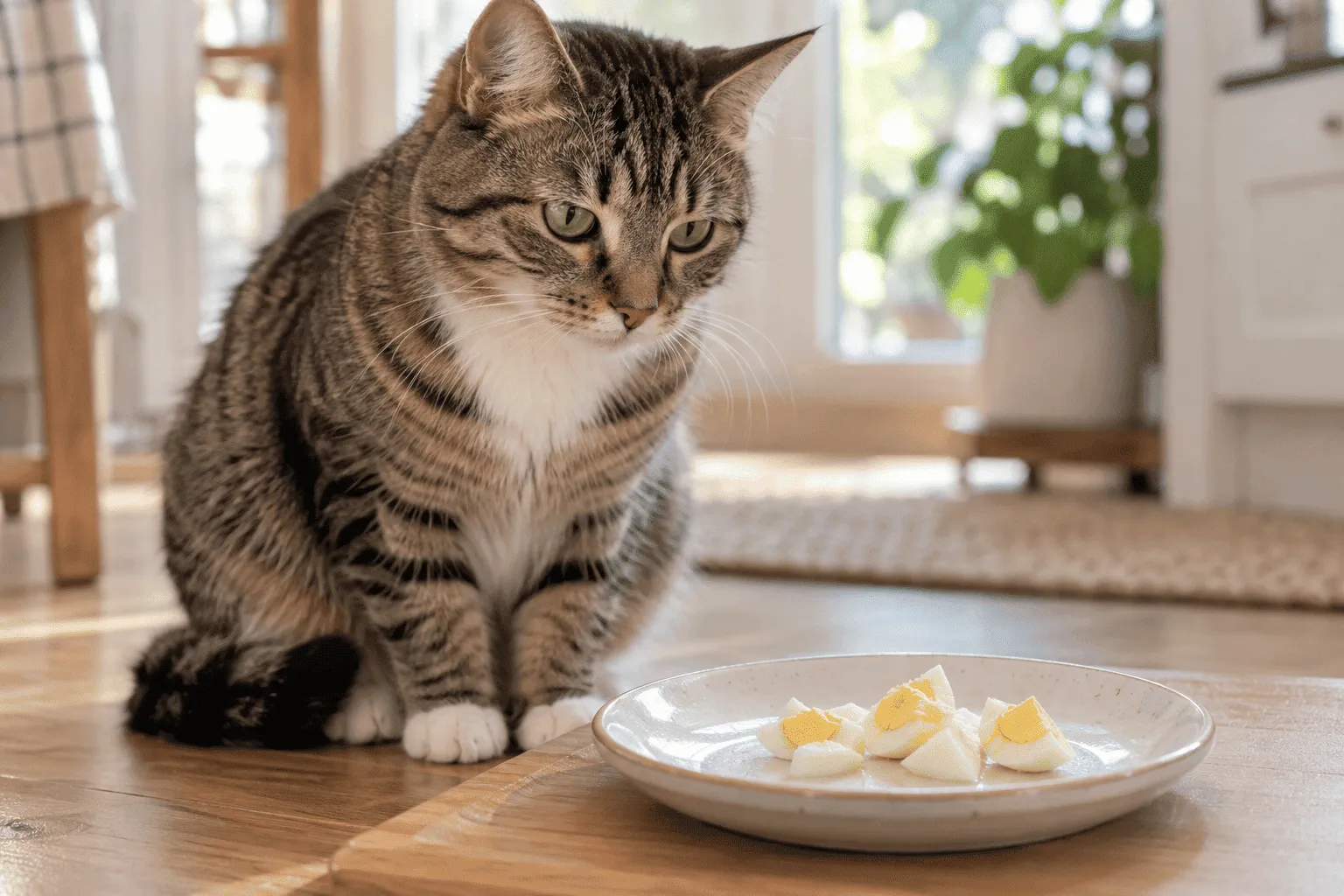
A large egg has about 70 calories. A 10-pound adult cat needs roughly 200 to 250 calories a day. The 10% treat limit therefore works out to about a quarter of an egg.
| Cat | Safe Portion | Frequency |
|---|---|---|
| Kitten (under 6 months) | 1/4 teaspoon | Once a week |
| Adult cat (10 lb / 4.5 kg) | 1-2 teaspoons | 1-2 times a week |
| Senior or overweight cat | 1 teaspoon or less | Once a week or less |
Start with a pea-sized piece. Wait 24 hours, then check the litter box. If the stool stays firm, the egg agrees with your cat.
Can Kittens Eat Eggs?
Yes, as long as the egg is cooked and plain. Kittens have small stomachs, so keep the portion tiny — about a quarter teaspoon. Too much fat can cause diarrhea in young cats. A kitten’s main food should always be a complete kitten formula.
What If Your Cat Ate Raw Egg?
Do not panic, but do pay attention. Watch for these signs over the next 24 to 48 hours:
- Vomiting or diarrhea
- Low energy or hiding
- Fever
- Loss of appetite
- A swollen or painful belly
If you see any of them, call your vet. Do not try to make your cat vomit at home — that can cause more harm than good.
For emergency advice, contact the ASPCA Animal Poison Control Center at (888) 426-4435 or the Pet Poison Helpline at (855) 764-7661. Both charge a consultation fee.
Safer Treats to Try Instead
If your cat enjoys eggs, these foods are also safe in small amounts:
- Cooked chicken or turkey — plain, no skin, no seasoning
- Cooked salmon — boneless and unsalted
- Blueberries — one or two berries, rich in antioxidants
- Seedless watermelon — a small cube, good for hydration
New cat owners can find more everyday feeding basics in our First-Time Cat Owner Guide.
Frequently Asked Questions (FAQ)
Can cats eat eggs every day?
No. Eggs should be an occasional treat, not a daily food. Feed them once or twice a week at most, and keep them under 10% of your cat’s daily calories. Daily eggs add too much fat and push your cat off a balanced diet.
Are eggs good for cats?
Yes, cooked eggs are good for cats in small amounts. They provide high-quality protein and several vitamins. The key words are “cooked” and “small amounts.” Raw eggs are not recommended.
Can cats eat egg shells?
No. Egg shells can splinter into sharp pieces that hurt your cat’s mouth, throat, or stomach. If your vet says your cat needs more calcium, use a pet-specific supplement instead.
What happens if my cat eats raw egg?
A small amount may cause no problems at all. Larger or repeated amounts can lead to vomiting, diarrhea, or a bacterial infection. Watch your cat for 24 to 48 hours and call your vet if you see any sign of illness.