Key Takeaway Soft nips from a purring, kneading cat are usually normal — they are called cat love bites. Most mean affection, overstimulation, play, or a request for attention; freeze instead of pulling away, redirect to a toy, and keep petting sessions short.
Imagine that you are petting your cat, and they are purring, kneading their paws, and resting against your arm. Suddenly, they turn their head and give you a quick, gentle nip.
It does not break your skin, but it leaves you wondering: Why does my cat bite me gently? Did I do something wrong?
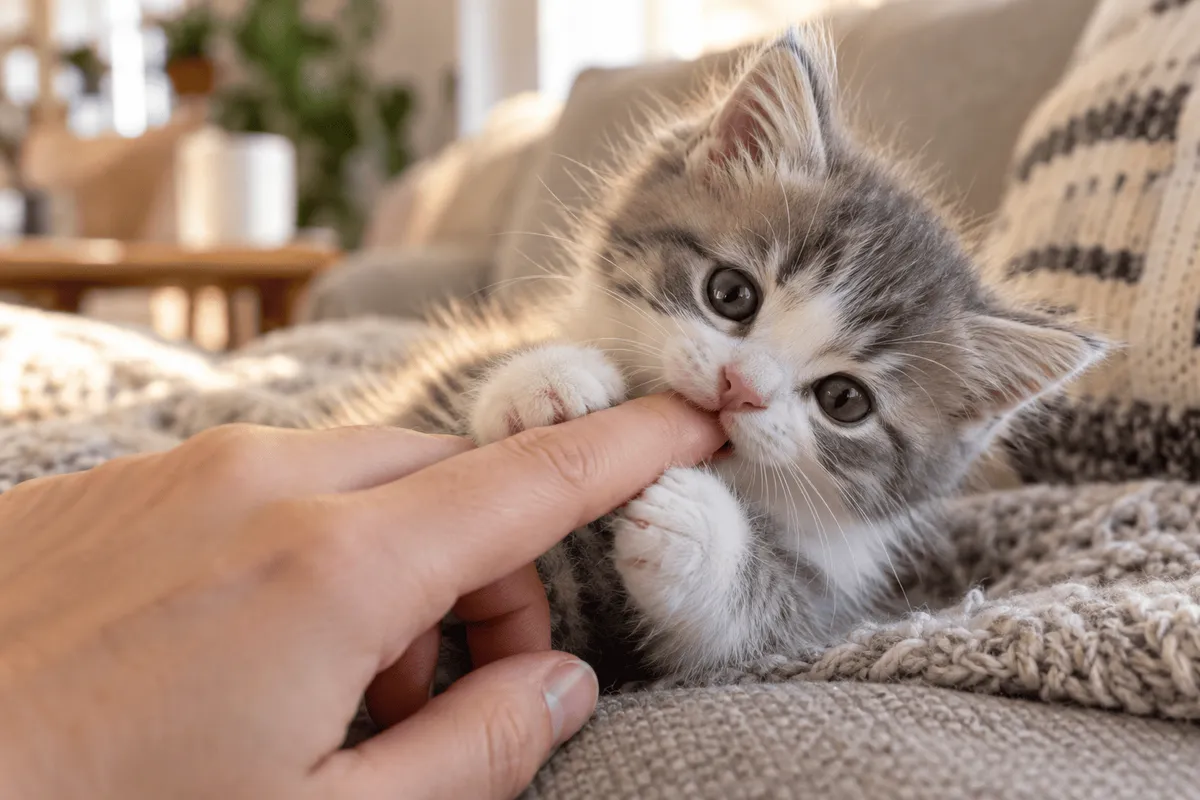
These soft nips are commonly called cat love bites. In most cases, they are completely normal. Here is everything you need to know about why cats give love bites, how to read your cat’s mood, and what to do when it happens.
What Are Cat Love Bites?
A love bite is a soft, controlled nip from a cat. Unlike a defensive or aggressive bite, a love bite does not break the skin and is not accompanied by hissing, growling, or claws.
Cats learn this behavior as kittens. Mothers and littermates nibble each other during play and grooming. When an adult cat gives you a love bite, they are using feline communication to interact with you.
4 Common Reasons Cats Give Love Bites
Cats communicate with their teeth more often than humans expect. Here are the four main reasons your cat nibbles on you:
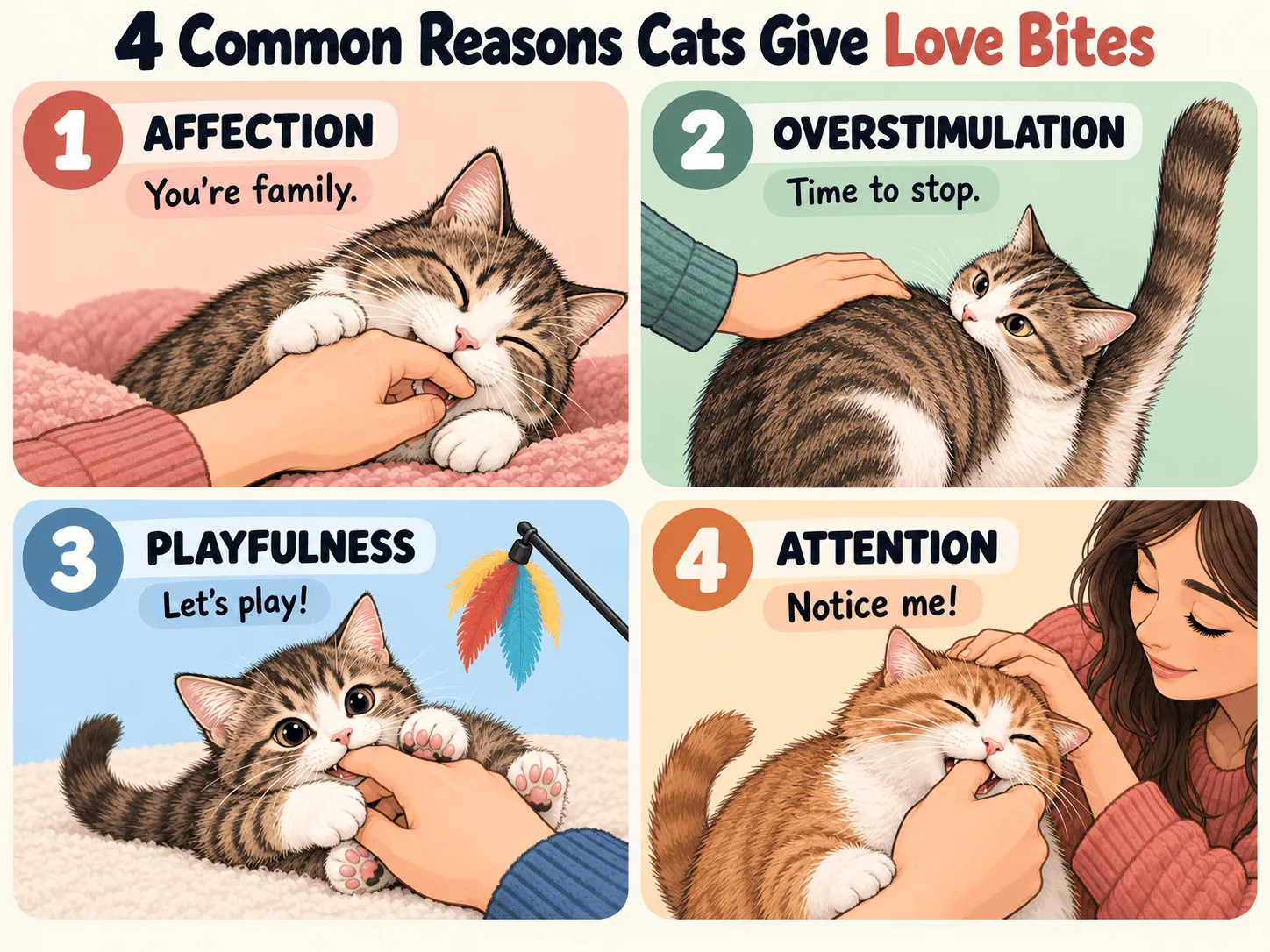
- Affection and Mutual Grooming (Allogrooming): In cat colonies, friendly cats groom each other. They use their small front teeth to clean fur and remove mats. A gentle nibble on your finger or arm is often your cat treating you like family.
- Overstimulation: A cat’s skin is full of sensitive nerve endings. Repeated petting—especially near the lower back or belly—can feel overwhelming after a while. A gentle nip is your cat’s polite way of saying: “That feels nice, but please stop now.”
- Playfulness: Young cats and kittens often use soft bites to invite you to play. If your hands were used as toys in the past, your cat may see your fingers as playmates.
- Attention Seeking: If your cat bites you softly and you immediately talk to them or pet them, they learn a quick lesson: biting gets human attention.
Cat Love Bite vs. Aggressive Bite: Quick Comparison
It is important to know whether your cat is showing affection or warning you of real anger. Use this quick guide:
| Feature | Cat Love Bite | Real / Aggressive Bite |
|---|---|---|
| Bite Pressure | Soft, gentle pressure; skin stays intact | Hard, sharp bite; punctures or tears skin |
| Vocal Sounds | Purring, quiet, or silent | Hissing, growling, or yowling |
| Body Posture | Relaxed muscles, soft eyes | Stiff body, arched back, flattened ears |
| Tail Movement | Still, or slow gentle sway | Fast swishing, thumping against the floor |
| Whiskers & Pupils | Normal whiskers, soft gaze | Dilated pupils, whiskers pulled back flat |
| What It Means | Affection, play, or mild overstimulation | Fear, pain, territorial defense, or anger |
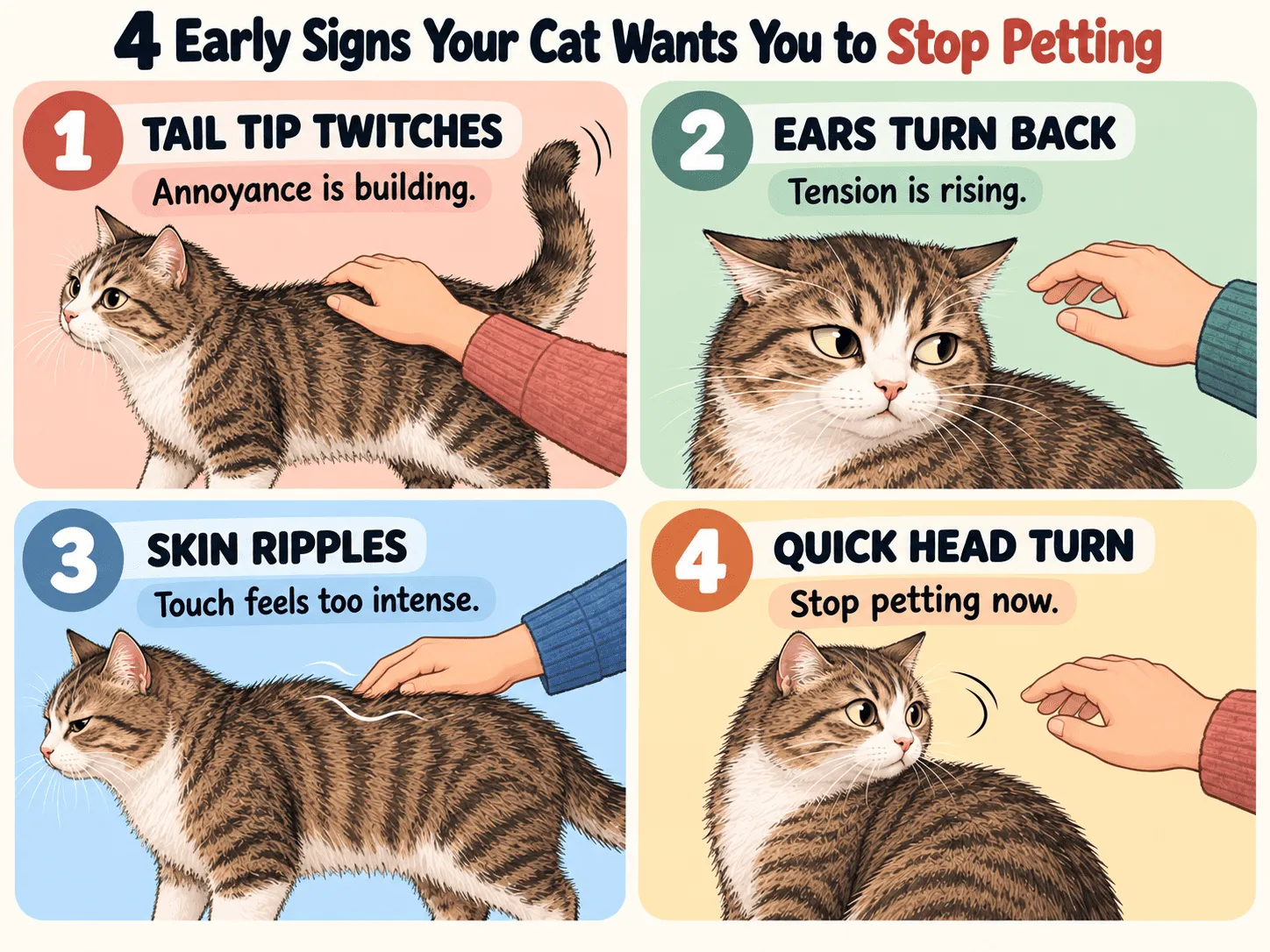
4 Early Signs Your Cat Wants You to Stop Petting
Most overstimulation bites do not happen out of nowhere. Cats give clear warning signs before they bite:
- The tail tip twitches: A steady twitching at the end of the tail means annoyance is building.
- The ears rotate back: “Airplane ears” turning sideways or flat signal tension.
- The skin ripples: You might see the fur or skin on their back twitch when touched.
- The head turns quickly: If your cat abruptly stops purring and stares at your hand, pause immediately.
When you notice any of these signs, take your hands away and give your cat space.
How to Stop Cat Love Bites (Without Hurting Your Bond)
Even when gentle, teeth on skin should not become an everyday habit. Here is how to manage love bites safely:
- Freeze, don’t pull away: Jerking your hand away triggers your cat’s hunting reflex, making them bite harder. Keep your hand completely still, and your cat will usually let go.
- Redirect to a kicker toy: Keep a soft kicker toy or plush wand nearby. The moment your cat gets nibbly, slide the toy into their paws so they bite the toy, not your skin.
- Keep petting sessions short: Pet your cat for 10 to 15 seconds, then stop while they are still happy. Let them ask for more touch on their own terms.
- Stick to safe petting zones: Most cats prefer gentle strokes around the chin, cheeks, and between the ears. Avoid the belly, base of the tail, and paws.
- Never yell or punish: Cats do not understand physical discipline. Hitting, pushing, or yelling will only make your cat fearful and turn gentle nibbles into defensive bites.
Frequently Asked Questions (FAQ)
Why does my cat bite me gently when purring?
Purring does not always mean pure calm. Cats also purr when they feel stimulated or excited. A gentle bite while purring usually means your cat loves the affection, but their senses are starting to feel overloaded.
Should I let my cat give me love bites?
It is best not to encourage it. Even gentle bites can teach kittens that human skin is an acceptable chew toy. As cats grow older and stronger, gentle nibbles can accidentally cause painful scratches or cuts.
Why do cats lick you and then bite you?
Licking is grooming behavior. In the cat world, licking followed by a small nibble is a natural grooming pattern. It can also mean your cat enjoyed the groom, reached their touch limit, and used a gentle bite to end the session.